
How Often Should You Replace Your Garage Door Springs?
Every homeowner will eventually need to replace garage door springs. These heavy-duty metal coils carry most of your garage door’s weight. Without properly functioning springs, the door cannot open or close safely. In fact, a broken garage door spring is one of the most common repair calls we receive at Omaha Garage Door Repair.
Garage door springs work every time you press your wall button or remote. Over time, daily use wears them down. If your garage is your main entrance, the springs may wear out even faster. In this guide, we explain how often to replace garage door springs, how to recognize early warning signs, and how to keep your system safe and reliable. Let’s dive in.
How Garage Door Springs Work
Most residential garage doors weigh between 150 and 300 pounds. The springs counterbalance that weight, making the door feel light and easy to lift. There are two main types:
- Torsion springs: Mounted above the door and twist to create a lifting force.
- Extension springs: Installed along the side tracks and stretch and contract.
Both types store high tension. When they weaken or break, the entire system loses balance. Thus, replacing garage door springs restores smooth movement, reduces strain on the opener, and protects other components from early wear.
Signs It Is Time to Replace Garage Door Springs
Garage door springs rarely fail without warning. In most cases, your system shows clear signs that tension is weakening before a complete break happens.
Pay attention to these common warning signals:
- The door feels unusually heavy when lifting it manually
- The garage door opens only a few inches and stops
- You hear a sudden loud bang from the garage
- The door appears crooked or uneven when moving
- A noticeable gap appears in the spring coil
- The opener strains, moves slowly, or sounds louder than normal
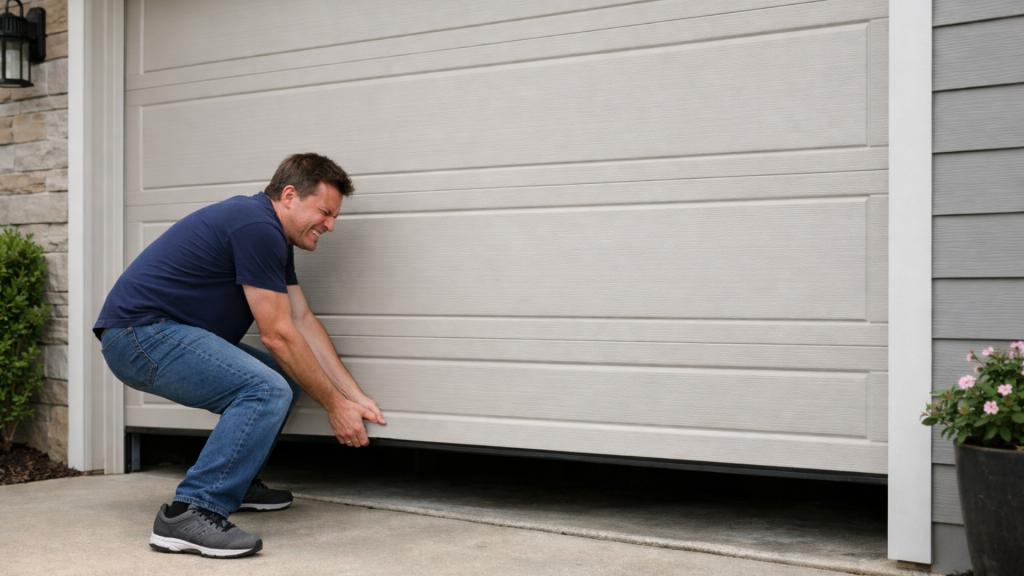
One of the most noticeable signs is a sharp snapping noise. Many homeowners describe it as sounding like something slammed into the house. In reality, that sound is the spring breaking under tension after reaching the end of its life cycle.
The moment you notice any of these symptoms, stop operating the door. Continuing to use it can damage the opener, bend tracks, or create a safety hazard. Schedule an emergency garage door repair immediately.
How Often Should You Replace Garage Door Springs in Omaha?
Most standard garage door springs last between 7 and 10 years. However, the real lifespan depends on how often you use your door. Garage door springs are rated by cycles. One cycle equals one full open and close. Standard springs are typically rated for about 10,000 cycles.
If you open and close your garage door four times a day, that adds up to about 1,460 cycles per year. At that rate, your springs may wear out in roughly seven years. More cycles mean faster wear.
High-cycle springs rated for 20,000 cycles are also available. While they cost more upfront, they last significantly longer. For active Omaha households that rely on their garage as the main entrance, this upgrade is often a smart long-term investment.
Should You Replace Garage Door Springs One at a Time?
If your garage door uses two springs and one breaks, it is best to replace both at the same time.
Even if the second spring still looks intact, it has gone through the same number of cycles. That means it is likely close to failure as well. Replacing only one spring can create uneven tension, which puts extra strain on the garage opener and causes the door to move unevenly.
Installing a matched pair keeps the system balanced. Balanced springs help the door open smoothly, reduce wear on other components, and prevent another service call in the near future.
At Omaha Garage Door Repair, we inspect the entire system before making recommendations. That ensures long-term reliability and helps homeowners avoid repeat breakdowns.
Why You Should Replace Garage Door Springs for Safety
According to the U.S. Consumer Product Safety Commission, regular inspection and proper maintenance help reduce the risk of injury. In fact, a failing spring does not just stop the door from working. It can overload the opener, bend tracks, and damage other components within seconds.
Attempting DIY torsion or extension spring repair is dangerous. These parts require specialized tools, precise measurements, and controlled handling. Improper adjustments can lead to serious injury or costly damage.
Professional replacement ensures correct tension, proper balance, and safe operation. Addressing worn springs early protects your household and prevents sudden emergencies.
Now let’s look at how routine maintenance can help you avoid unexpected failure altogether.
How Garage Door Spring Maintenance Helps You Avoid Early Replacement
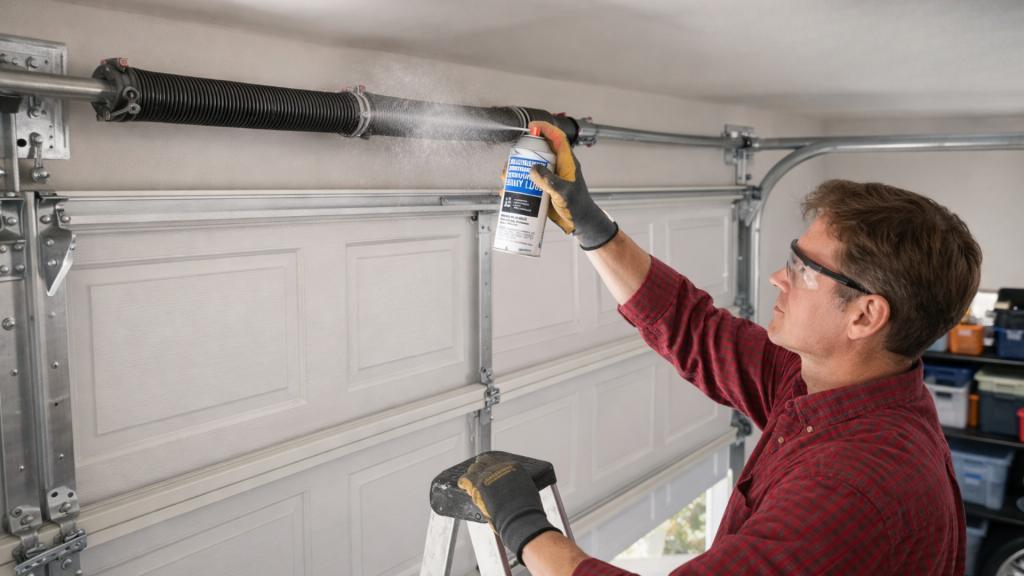
Simple preventive care keeps your garage door springs working longer. Homeowners can take a few basic steps:
- Lubricate the springs every 3 to 6 months with a garage door lubricant
- Listen for new grinding, squeaking, or popping sounds
- Check for visible rust or corrosion
- Schedule a professional inspection once a year
In Omaha, changing temperatures, humidity, and winter conditions can accelerate wear on metal components. Homes near downtown or in areas exposed to moisture may see faster corrosion. Ultimately, preventive maintenance protects your investment and reduces the risk of sudden failure. So, what should you expect during a garage door spring replacement?
What to Expect When Professionals Replace Garage Door Springs
When professionals replace garage door springs, the process is controlled, measured, and safety-focused.
A certified technician will:
- Inspect the full garage door system
- Confirm the correct spring type and size
- Secure the door in place
- Carefully remove the worn springs
- Install properly rated torsion or extension springs
- Adjust tension and test door balance
- Finally, verify smooth opener operation
For extension spring systems, safety cables are installed or checked to reduce injury risk if a spring ever breaks.
After installation, the door should move smoothly, evenly, and quietly. At Omaha Garage Door Repair, we complete every job with final testing and clear explanations so homeowners understand exactly what was done.
Schedule Your Garage Door Spring Inspection in Omaha
At Omaha Garage Door Repair, we have served local homeowners since 1997. Our certified technicians provide precise garage door spring replacement, careful system balancing, and full safety checks to protect your opener and tracks.
We offer free estimates, clear explanations, and warranty-backed workmanship. No pressure. Just honest guidance based on what your system actually needs.
Call (402) 819-5158 today for a free estimate. Let our team make sure your garage door is safe, balanced, and ready for daily use.



